
Becoming a competent aesthetic injector is not simply about learning where to place a needle. You are working with facial anatomy, prescription medicines in some cases, patient expectations, and complications that can require rapid clinical judgement. That is why the quality and depth of your aesthetics courses matter.
For students planning a career in injectables, Level 7 training has become an important part of the conversation. But there is also plenty of confusion around what the law actually requires. As of 2026, there is not a blanket UK-wide law stating that every practitioner must hold a Level 7 qualification to perform all Botox and dermal filler treatments. England is developing a licensing framework for non-surgical cosmetic procedures, while rules and proposals vary across the devolved nations. The English government has also said further consultation and secondary legislation are still required before its licensing restrictions take effect.
So, why does Level 7 matter? Because legal permission and professional competence are not the same question. For students choosing a career pathway, higher-level training can provide deeper education in consultation, anatomy, risk management, injectable techniques, and professional practice.
Read on before choosing your next course. Understanding where Level 7 sits within the changing regulatory landscape can help you make a much more informed investment in your aesthetics career.
What Is a Level 7 Certificate in Aesthetic Practice?
Before deciding whether you need Level 7, it is important to understand what the qualification is designed to represent. Level 7 is a postgraduate-level qualification standard on the regulated qualifications framework. Within aesthetics, Level 7 programmes can focus on advanced non-surgical aesthetic injectable procedures.
VTCT Skills, for example, currently lists Level 7 qualifications covering non-surgical aesthetic injectables. Its pathways include a broader Level 7 Diploma as well as modular Level 7 Certificates specifically covering dermal fillers, botulinum toxin, and skin boosters. The curriculum areas described by VTCT include consultation principles, risk management, technical injectable procedures, and, within the Diploma, subjects such as anatomy, professional ethics, and appearance psychology.
That depth is one reason students researching an Ofqual-regulated aesthetics qualification should look beyond the words “Level 7” in a course advertisement. Not every programme marketed using Level 7 terminology necessarily carries the same recognition.
The Joint Council for Cosmetic Practitioners (JCCP) advises students to check whether the qualification is recognised by the appropriate regulatory and professional bodies. It describes Level 7 as a benchmark of competence equivalent to master’s-degree level within the qualifications framework.
For a student, this distinction matters enormously. Completing a short introductory injectable course and completing a regulated Level 7 programme are very different educational experiences.
Level 7 is therefore better viewed as an advanced competency pathway rather than simply another certificate to add to your portfolio.

Why Level 7 Matters for Future Injectors
The question “do you need Level 7 for Botox?” sounds as though it should have a simple yes-or-no answer. In 2026, the reality requires more context.
1. Level 7 Is Not Currently a Blanket UK-Wide Legal Requirement
This is the most important point to establish first. As of 2026, there is no universal UK law stating that every person administering cosmetic Botox or facial dermal fillers must possess Level 7 simply because they perform injections.
That does not mean the sector is unregulated or that anybody should inject after minimal training. Botulinum toxin products are prescription-only medicines. NHS guidance states that botulinum toxin must be prescribed following a consultation with an appropriate healthcare professional.
The person administering it does not necessarily have to be the prescriber, but the prescriber has responsibilities regarding the training and safety of the person administering the treatment. Dermal fillers are different. They generally do not require a prescription, although prescription-only medicines can become relevant to treatment or complication management.
The NHS specifically warns patients to examine a filler’s source and their practitioner’s qualifications, training, and experience because serious complications can occur. So, if you are asking whether Level 7 is currently a universal legal licence to inject, the answer is no.
If you are asking whether advanced, recognised training can place you in a stronger position for competent practice and future professional standards, that is a very different conversation.
2. UK Aesthetics Regulation Is Moving
Students should train for the profession they are entering, not only for yesterday’s rules. The UK aesthetics regulation 2026 landscape continues to develop, particularly in England. The Health and Care Act 2022 gave the Secretary of State powers to introduce a licensing scheme for certain non-surgical cosmetic procedures in England.
Under the proposed framework, practitioners and the premises from which they operate could become subject to licensing requirements. Following consultation, the government stated that further work was needed around education, training, qualifications, insurance, infection control, and other aspects of the system. It also confirmed that the highest-risk procedures would be prioritised for tighter restrictions.
Botulinum toxin injections and facial semi-permanent dermal fillers were among procedures previously proposed within the government’s medium-risk or “amber” category. However, students should not mistake a consultation proposal for legislation already in force. That distinction matters.
A reputable training provider should explain what the current rules are, what remains proposed, and what is still unknown. Regulation should never be used as a scare tactic to pressure students into purchasing a qualification.
3. Future Standards Are Likely to Put More Weight on Training
One theme running through the English licensing discussion is education. The government’s 2025 consultation response described nationally recognised education, training, and qualification requirements as one of the intended aims of the licensing scheme. However, considerable detail remains to be determined.
That means nobody should promise students that completing one particular Level 7 course today automatically guarantees eligibility under every future licensing rule. Those final requirements have not all been established. Still, there is a sensible reason to take robust education seriously.
If the direction of travel is toward clearer competency standards, practitioners with comprehensive, recognised training may be better prepared to demonstrate what they have learned and how their competence was assessed. For students researching Level 7 injectables in UK, that future-facing perspective can be more useful than asking only what the minimum requirement is today.
4. Facial Anatomy Demands More Than a Weekend Introduction
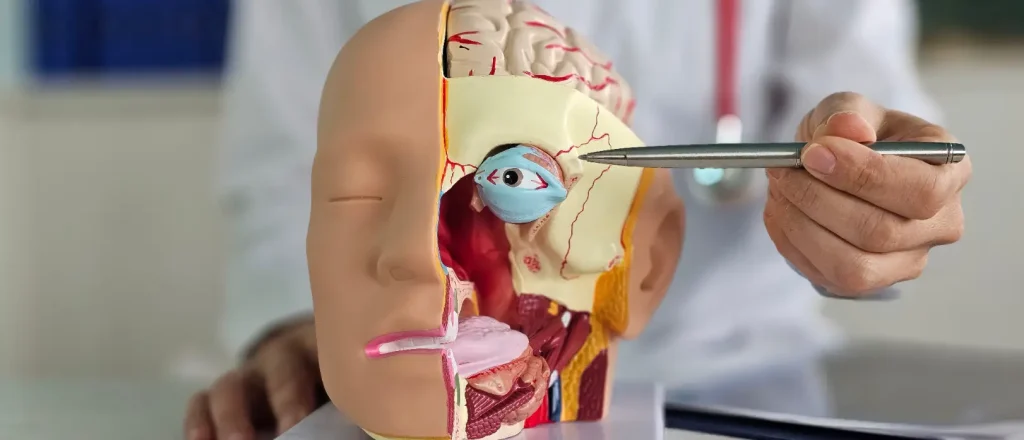
An injector needs to understand what sits beneath the skin. Blood vessels, nerves, muscles, fat compartments, bone, and other anatomical structures influence treatment planning and risk. Anatomy also varies from patient to patient. This is where comprehensive aesthetics courses can make a meaningful difference.
Students need more than memorised injection points. They need to understand why a treatment is being performed, what structures may be nearby, and when anatomy means the original plan should change. That knowledge also supports better aesthetic judgement.
A patient does not arrive as a diagram. Faces are asymmetric. Aging occurs differently. Previous treatments can affect the plan. What works beautifully for one person may be inappropriate for another. Advanced education helps move students from following a formula toward making thoughtful treatment decisions within their competence.
5. Complications Require Knowledge and Judgement
Aesthetic injections can produce complications. Some are relatively minor and temporary. Others can require urgent recognition and escalation. That reality is one of the strongest arguments for thorough education.
Students need to learn how to recognise when something is not following the expected course. They should understand risk reduction, documentation, aftercare, escalation pathways, and the limits of their own scope of practice.
Training should also teach students that confidence does not mean handling everything alone. Competent practice includes knowing when to stop, seek senior clinical support, refer, or obtain emergency assistance. This is why the quality of Level 7 education matters more than the label itself.
A certificate has limited value if the programme does not genuinely develop practical and clinical competence.
Build Your Career on Stronger Training
A changing regulatory landscape makes one thing increasingly important: practitioners need education that prepares them to think, assess, and treat responsibly. Quality aesthetics courses should develop more than technical ability. They should strengthen anatomy knowledge, consultation skills, risk awareness, professional judgement, and confidence grounded in competence.
Skin Lab Medical Academy in Hornchurch, Essex, provides structured aesthetics training for students who want to develop their skills through clear progression pathways. Whether you are entering aesthetics or looking toward advanced Level 7 study, choosing comprehensive training can help you build a professional foundation designed for both today’s industry and the standards that may shape its future.
Contact us today and find out more about our offers!